

Mississippi River Fishing Charters — Pools 1 Through 9
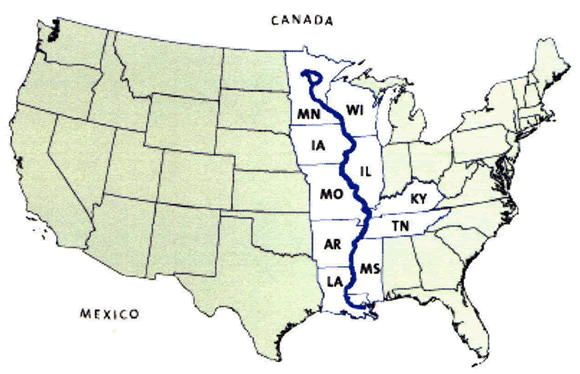
Captain Ryan Foster runs guided trips up and down the Upper Mississippi River, working the backwaters, wing dams, and main channel across Pools 1 through 9.
Whether you're after open-water walleye in the summer or want to chase perch and bluegill through the ice, the airboat gets you into water most guides can't reach — and gets you there safely.

A Little History on the River You're Fishing
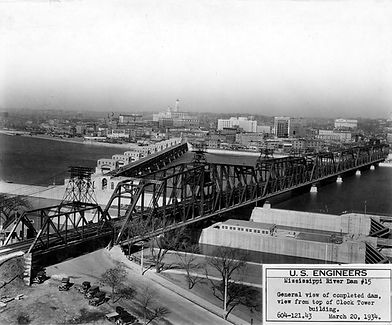
The Mississippi River you'll fish today doesn't look much like it did a century ago. Before the 1930s, the upper river was shallow and free-flowing — in some stretches, low enough that people could wade across it.
That changed when Congress authorized a project to build a series of locks and dams to guarantee a steady 9-foot channel for barge traffic between the Twin Cities and St. Louis. Construction ran through the Great Depression, and by the late 1930s, more than two dozen lock-and-dam structures had turned the free-flowing river into the chain of "pools" anglers fish today.
Each pool is simply the stretch of river held back by its dam, and it's named for that dam — Pool 8, for example, sits behind Lock and Dam No. 8. Two pools go by their own names too: Pool 4 is better known as Lake Pepin, and the lower half of Pool 9 is called Lake Winneshiek. The dams didn't just create slack water for barges — they created the wing dams, current seams, backwaters, and deep wintering holes that walleye, perch, and bluegill call home today, and that's exactly the structure we fish.

The Pools — What to Expect on Each
Pool and Stretch
Known For
Pool 1 - Minneapolis / St. Paul
Urban river stretch near the Twin Cities
Pool 2 - St. Anthony Falls, MN → Hastings, MN
Pool 3 - Hastings, MN → Red Wing, MN
Backwater lakes (Spring Lake, Grey Cloud Slough); strong walleye and sauger
Transition water leading into Lake Pepin
Pool 4 - Red Wing, MN → Alma, WI
Also known as Lake Pepin — wide, lake-like, one of the river's premier walleye stretches
Pool 5 - Alma, WI → Minnesota City, MN
Extensive backwaters and side channels
Pool 6 - Winona, MN → Trempealeau, WI
Mix of main channel and sloughs
Pool 7 - Trempealeau, WI → Dresbach, MN
Backwater complex near Trempealeau
Pool 8 - Dresbach, MN → Genoa, WI
One of the river's best-known multi-species fisheries; strong ice fishing destination
Pool 9 - Genoa, WI → Lynxville, WI
Lower reach known as Lake Winneshiek; large backwater and island network near the Upper Iowa River confluence
Target Species
Walleye, Yellow Perch, Bluegill
Best Times to Fish
Spring (April–May)
As the river opens up, walleye push toward spawning areas and current breaks. Fish are often finicky right after ice-out — a light, natural approach out-produces a loud one this time of year.
Summer (June–August)
Wing dams come into their own. Walleye hold on the face, tip, and scour hole of these rock structures, and panfish scatter into weed edges, brush piles, and backwater cover as water warms.
Fall (September–November)
One of the best windows of the year. Walleye stack up in deep, low-current wintering holes ahead of freeze-up, and jigging with the current through these areas can produce trophy fish.
Winter (Ice season)
Backwaters go quiet under the ice but stay productive — perch and bluegill hold near submerged weeds and drop-offs, and walleye continue to bite in slack-water eddies. This is where the airboat matters most: it provides safe transport across ice and open-water stretches that would otherwise be unreachable, or unsafe to cross without the right equipment.
Recommended Bait & Tackle
Walleye (open water)
Jig-and-minnow or jig-and-plastic combos worked vertically along wing dams and current seams; 3-way rigs with live bait fished around the face and tip of wing dams in summer; crankbaits and spinner rigs for trolling deeper stretches.
Walleye (ice fishing)
Aggressive jigging spoons and blade baits to trigger cold, lethargic fish holding in slack-water eddies near stable winter temperatures.
Panfish (bluegill/perch, open water)
Slip bobber rigs with small jigs tipped with crawler pieces, worms, or waxworms, fished around wing dams, weed lines, and wood cover.
Walleye (fall/pre-ice)
Slow presentations — jigs tipped with fathead minnows worked through deep, low-current holes.
Panfish (ice fishing)
Light or ultra-light gear with small jigging spoons or plastics — perch and bluegill bite gets subtle in mid-winter, so sensitivity matters.
Services
-
Fully guided open-water and ice fishing trips
-
Airboat access to remote backwaters and shallow-water areas unreachable by conventional boats
-
Airboat transport across ice for a safe, reliable way to reach far-flung backwater spots in winter
-
Year-round fishing opportunities
-
Custom trips for anglers of all skill levels
Areas Served
La Crosse, Holmen, Trempealeau, Stoddard
What to Bring
Sunglasses, hat, sunscreen, warm clothing, rain gear, camera, medications, food and beverages, cooler with ice, and your current fishing license
(Wisconsin, Minnesota, or Iowa depending on which pool/side you're fishing).